Advance praise for Welcome to Paradox City


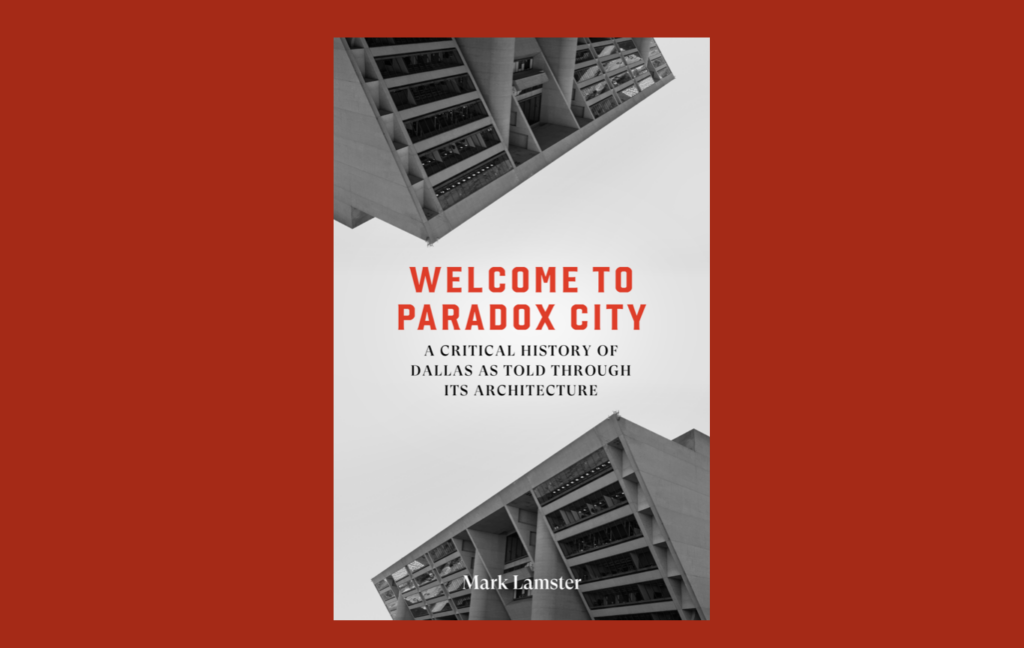
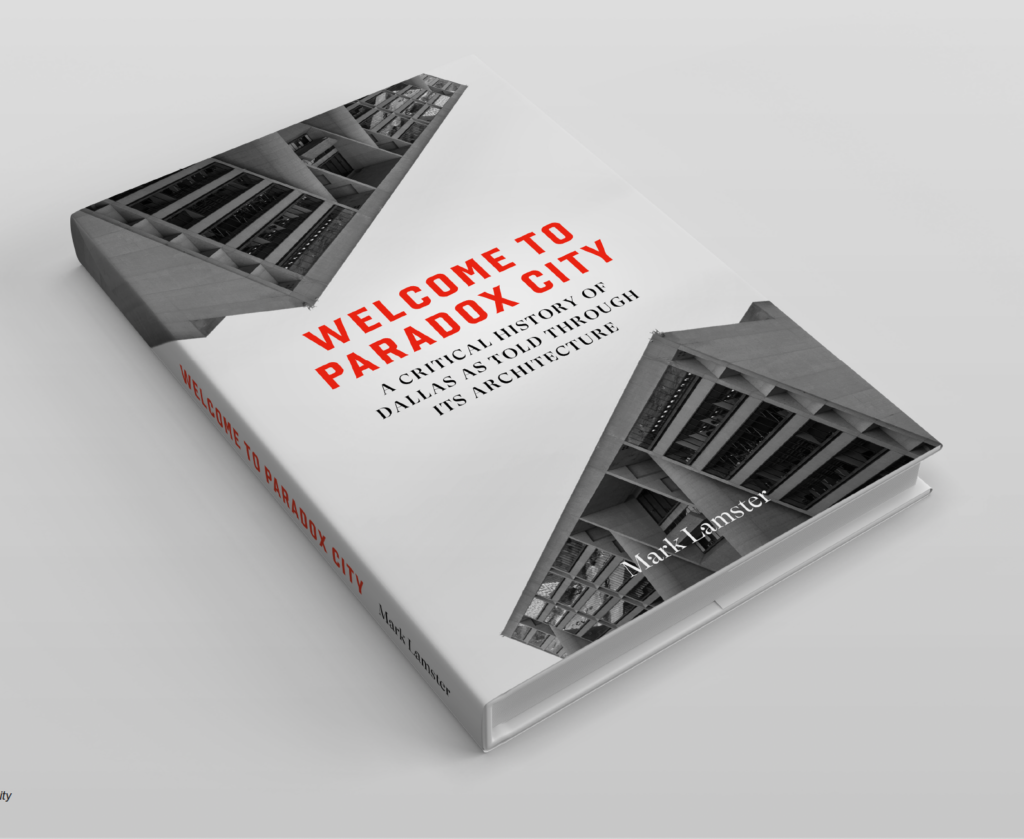
Smart people are saying nice things about Welcome to Paradox City, which comes out August. 4 from Deep Vellum, but is now available for preorder.

“No one writes with as much passion about Dallas architecture as Mark Lamster. Who will ever forget his great tirade during the fight over City Hall’s future? Or what about his lovely ode to the little-known Grand Lodge of the Knights of Pythias? Lamster is a true treasure whose writing has defined Dallas, for better or worse.”
— Skip Hollandsworth, Texas Monthly

“Mark Lamster has become the conscience of our city. His message is a cautionary one: no city can become truly great if it continually erases the work of those who came before. With each essay, he holds up a mirror to us—and what we see matters.”
— Laura Miller, Mayor of Dallas (2002–07)

“Brash, inventive, optimistic — Mark Lamster’s adjectives for threatened Dallas City Hall could easily serve as the tagline for this book. Lamster uses his characteristic wit and ear for a yarn to make the characters, conflicts, and beauties of a diverse, still-expanding metropolis come alive, offering a complex look at a city too often dismissed as all shine, no substance.”
— Alexandra Lange, Pulitzer-Prize winning critic and author of Meet Me by the Fountain

“What the hell am I going to say about the great Mark Lamster that the Pulitzer committee already hasn’t?”
— Robert Wilonsky, city columnist, The Dallas Morning News

“Spitting mad, hilariously funny, exasperated, grumpy, yet deeply caring: Mark Lamster gets emotional about architecture, landscape — and Dallas. Telling the stories behind some of his city’s most iconic landmarks, Lamster confronts the base, the sordid, the silly, but also the poignant and sublime. Welcome to Paradox City is a compelling look at the people and the motivations that drive the production of architecture in Dallas: the gaudy, the brittle, the world-changing.”
— Stephen Fox, architectural historian, Rice University

“Lamster’s book profoundly grasps how our city’s architecture helped determine who we are and how we live as a community, and because of that it will help us build a better future. That’s why even when I disagree with him, I always cheer him on.”
— Mike Rawlings, Mayor of Dallas (2011–19)

“Lamster answers the main question first: when did Dallas get a soul? Then he offers a profound and lyrical description.”
— Jim Schutze, author of The Accommodation
Save Dallas City Hall

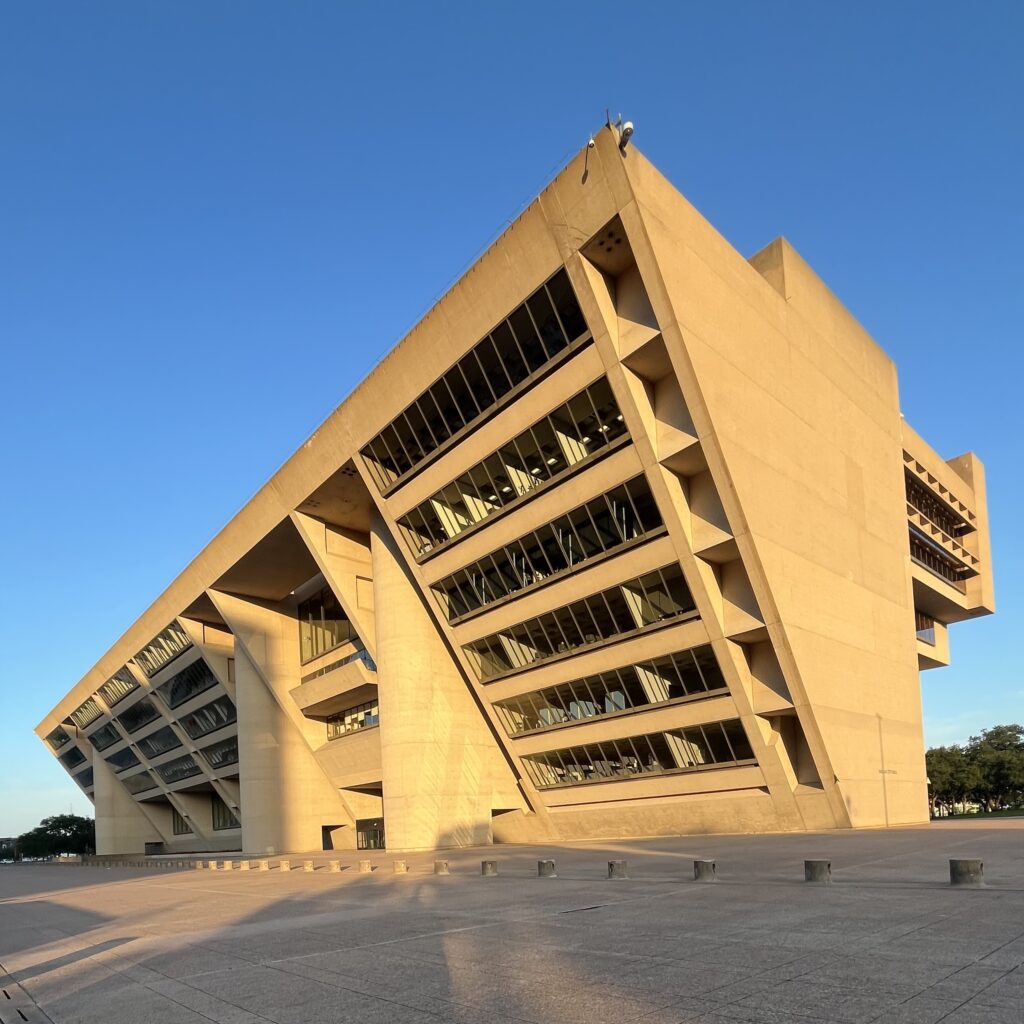
Please join me in the fight to save I.M. Pei’s iconic Dallas City Hall from the wrecking ball, a prospect now under consideration due to a massive deferred maintenance bill and pressure from the development community to replace it with a new sports arena. In my estimation, demolition of this masterwork — Ada Louise Huxtable called it “breathtaking” — would stand as the most significant loss of a public building since Penn Station was torn down in the 1960s. As I write in the Dallas Morning News:

“Of all the irresponsible, ill-conceived, short-sighted, counter-productive, cynical, philistine and downright dumb ideas I’ve heard in my time writing about Dallas, the prospect of razing City Hall stands alone. Demolishing architect I.M. Pei’s iconic building would be an act of epic mismanagement indefensible on aesthetic, environmental, financial or moral grounds.”

A Recycled Glass House

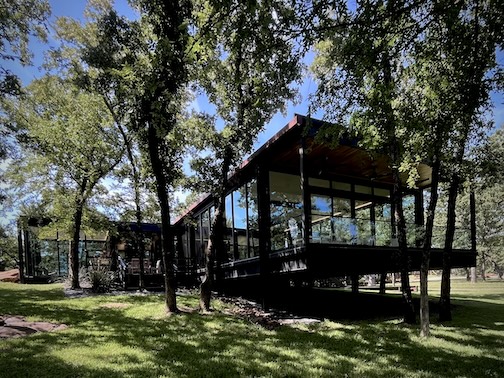
Up in the north Dallas exurbs, sculptor George Tobolowsky has done something that will surely drive architectural purists batty: he has smushed together Mies’s Farnsworth House and Philip Johnson’s Glass House, and somehow doing this while using metal recycled from RedBird Mall. Amazingly, it works. My story on it is here. Another recent feature looks at Pratt Box and Henerson’s St. Stephen United Methodist Church, one of the most avant-garde works of American ecclesiastical architecture of its era (1962), which somehow found its way to suburban Mesquite. It’s what you get when you combine Le Corbusier’s Ronchamp chapel with the adobe architecture of New Mexico. Wild. Other recent work: The foolishness of Donald Trump’s executive order on architecture; a bad plan for Philip Johnson’s Comerica Tower; what a Texas Flood memorial should be; Dallas continually getting in its own way; how to make a safer downtown; the latest plans for the Dallas Convention Center; DFW’s plans for a modular new terminal; Some advice for the new Nasher director; a step forward for Dallas planning (say what?!); the good and the bad at the remade Alamo; the new Medal of Honor Museum; the endless dickering over plans for Thanks-Giving Square; crap movies about architecture; a handsome home for LGBTQIA seniors; and why it’s about time to landmark Dallas City Hall.

Spanish Sojourn

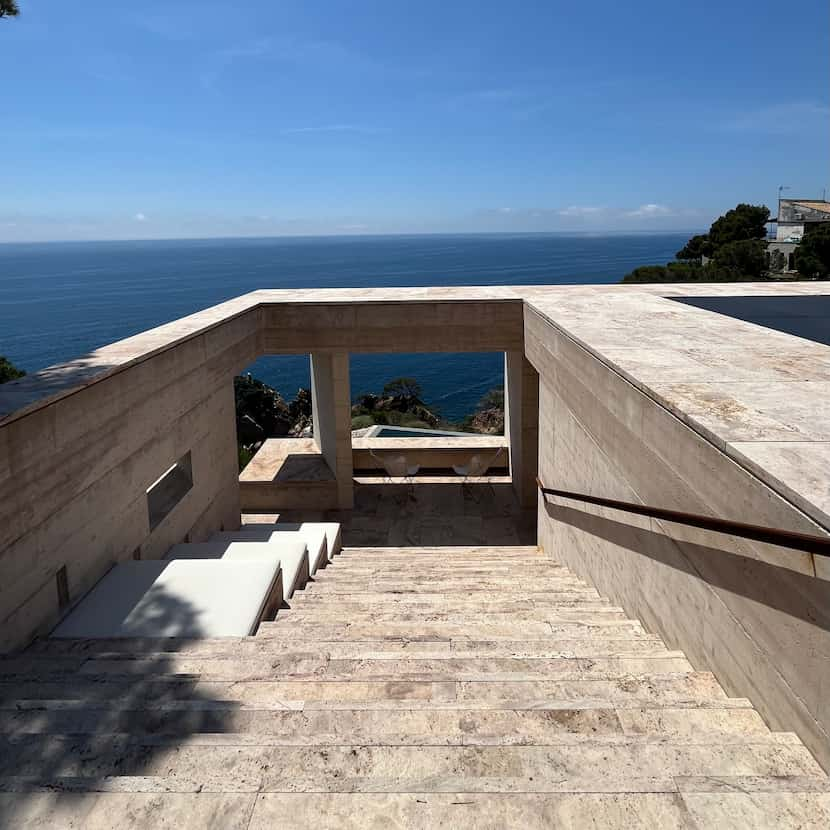
Earlier this summer, I traveled to Spain to visit the work and spend time with the architects Fuensanta Nieto and Enrique Sobejano, who won the commission to “reimagine” the Dallas Museum of Art. I was deeply impressed with both the architects and their work, a I write in a feature for the Dallas Morning News. (The image above is their weekend home on Spain’s Costa Brava.) Some other recent stories: A history of the Nasher Sculpture Center (part of my series on the essential buildings of Dallas). A column on why the bleacher stair trend has to end. A call for a new architecture school in Dallas. A look at the impact on downtown of a new convention center and a potential new basketball arena/casino development. And an explanation of why Dallas housing is “bananas.”

A Decade in Dallas

This year I celebrated my ten year anniversary as the architecture critic of the Dallas Morning News, and in April I looked back at that time and the phenomenon I call Dallas Logic. As for 2023, Dallas was its usual self, offering no shortage of compelling narratives. I tracked the selection of an architect for the expansion of the Dallas Museum of Art; followed a long forgotten creek under downtown; I looked at why the city has consistently failed to preserve Frank Lloyd Wright’s Kalita Humphreys Theater; examined the shifting plan for an extravagant Trinity Park; continued my series on the city’s defining buildings; looked at how AI performs architecture criticism; profiled the city’s most prolific architect; covered projects using Quonset huts and Flinstones curves; and wrote about the most beautiful (and meaningful) new building in Texas. Can’t wait until next year.

A Plan to Reinvent Dealey Plaza

Dealey Plaza doesn’t work. The gateway to downtown Dallas where John F. Kennedy was assassinated is a dangerous mess that fails its critical functions as a site for civic memory and essential transportation corridor. A new plan, developed in collaboration with Stoss Landscape Urbanism, MPdL Studio, and Delineator Landscape, would rectify these flaws, and finally bring a dignified connection to adjacent Martyr’s Park, dedicated to victim’s of lynching in Dallas. Among its key elements would be the closure of Elm Street to traffic, the lighting of the Triple Underpass, placing memorial pools at the points of assassination, the creation of a memorial overlook and promenade linking Dealey Plaza to Martyr’s Park, and the creation of a multi-modal boulevard leading to the Trinity. The plan would maintain the historic integrity of Dealey Plaza, touching only the spaces at its fringes, such that it will appear virtually unchanged since 1963. You can hear me chatting about it here and here.

In other news, my series on the buildings that define Dallas continues with the Adolphus and NorthPark Center. Also: why everything looks the same (aka “The Flattening“), the 50th anniversary of the Kimbell, and my thoughts on Prop A.

The Buildings that Made Dallas

Some happy news: I’m working on a new book, a cultural history of Dallas as told through its architecture. It will be published by the wonderful Dallas-based non-profit Deep Vellum, and is being serialized in the Dallas Morning News. The first installment, on the ante-bellum mansion Millermore, is already live. (Thanks to Allison V. Smith for the wonderful photos.) You can look forward to future pieces on the Adolphus, City Hall, and….well…you’ll just have to wait.

Some other recent work: A glowing new park for downtown Dallas; an affront at UTD, the plan to expand the DMA; Does Dallas really need a new convention center; a new library in Dorchester; Dallas landmarks in jeopardy; the future of I-345; Preservation efforts in the Park Cities; A Harry Bertoia exhibition at the Nasher; the problem with elevator buttons; “Dormzilla,” A tribute to Gyo Obata; the fight to save Ukraine’s patrimony; and a truly wacky building in Grapevine.

I should also note here that Kevin Lippert the founding publisher of Princeton Architectural Press, and a mentor and dear friend, passed away last month after a decades long battle with brain cancer. (The picture above is Kevin at Expo 2000 in Hanover, a trip we took following the Frankfurt Book Fair that year.) He was an immensely influential figure in the field of architecture, but also in my own life. I wrote a bit about what he meant to me and to the world, at the design site Common Edge. A terrible, terrible loss.

A Big Glowing Museum (and Other Stories)

In this new era for architecture, with its emphasis on equity, sustainability, context, mobility, and resilience, among other social factors, aesthetics can seem like an afterthought, and understandably so. But Steven Holl’s new Kinder Building for Houston’s Museum of Fine Arts is flat out beautiful, and that’s not nothing. You can read about it, and Holl’s place in architecture, in my review of that building, plus the restored Rothko Chapel by ARO. Other recent work includes this column on how parking requirements hurt cities, a boost for the Dallas skyline, a new library for an immigrant community, a new recreation center (I may have gotten carried away with Sound of Music references here, but if you’re given the “Singing Hills Recreation Center,” what can you do?), a clinic for the underserved (by MASS Group), AT&T’s attempt to brand downtown, a diagnosis of problems in the Arts District, a wicked cool park (by Field Ops), the architectural tastes of Vladimir Putin, why Dallas needs to be more boring, why Dallas architecture is still so bad (but also good), the kitsch fountain design that will mar Klyde Warren Park, how the historic center of Black Dallas has been turned into a luxury hotel, and, for good measure, a review of Kengo Kuma’s Rolex Tower told in the form of superhero fan fiction. Enjoy!